Monetize
How to make money as a content creator in fitness

Eden Metzler
26 fitness challenge ideas, grouped by how each one runs, plus how to pick the right one, run it step by step, sell it, and keep the members who finish.
If you’re a fitness creator looking for a challenge to run, pick one that’s simple, has a clear start and finish, and fixes one thing your audience already struggles with, like moving every day, getting stronger, or sticking with a habit. Then make sure it leads somewhere, so the people who finish have a reason to stay.
Here are 26 fitness challenge ideas, grouped by how each one runs. Every one of them works at any level. Give beginners an easier version and let advanced members go further.
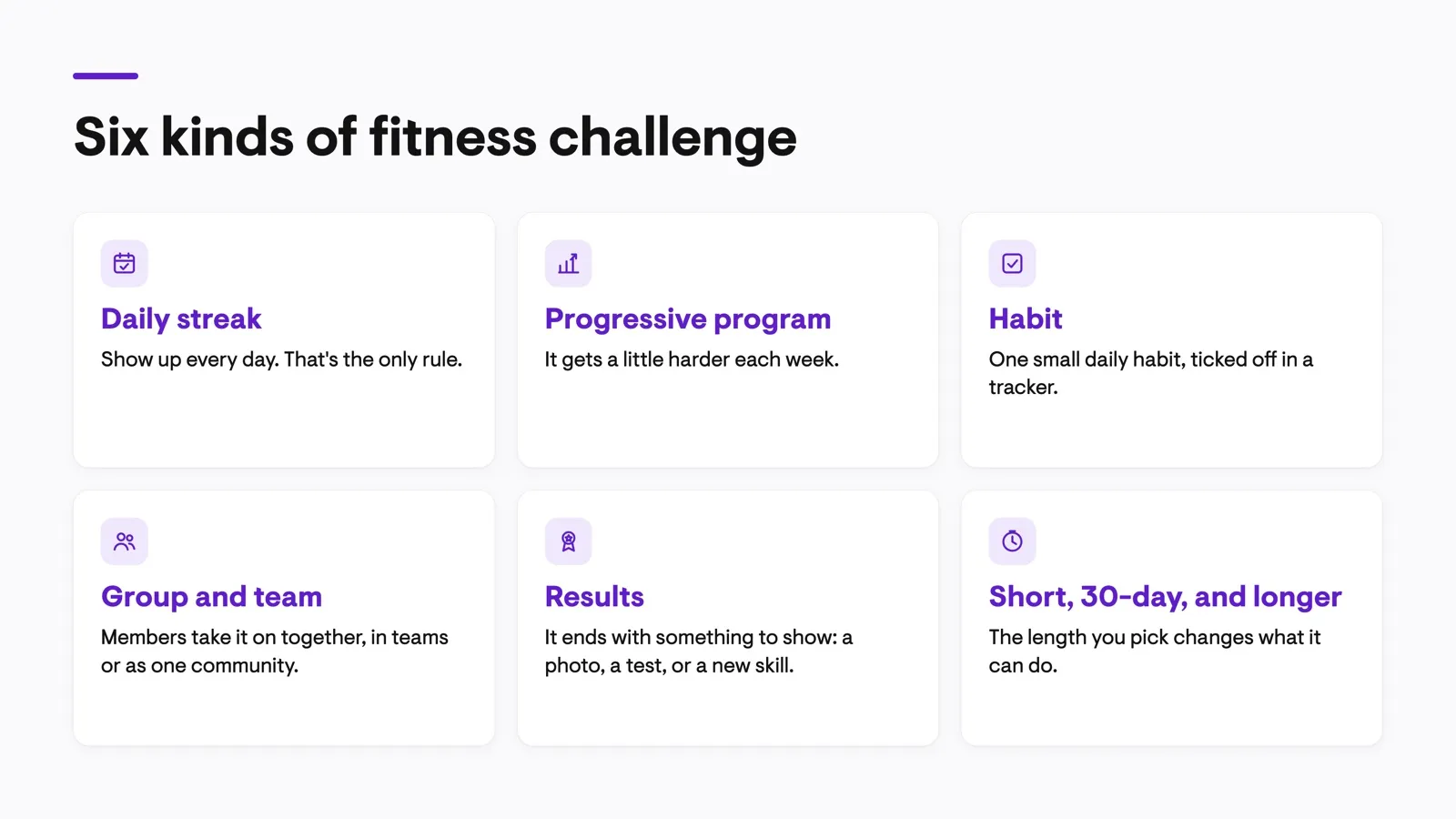
A daily streak is the easiest first challenge, because the only rule is to show up every day.
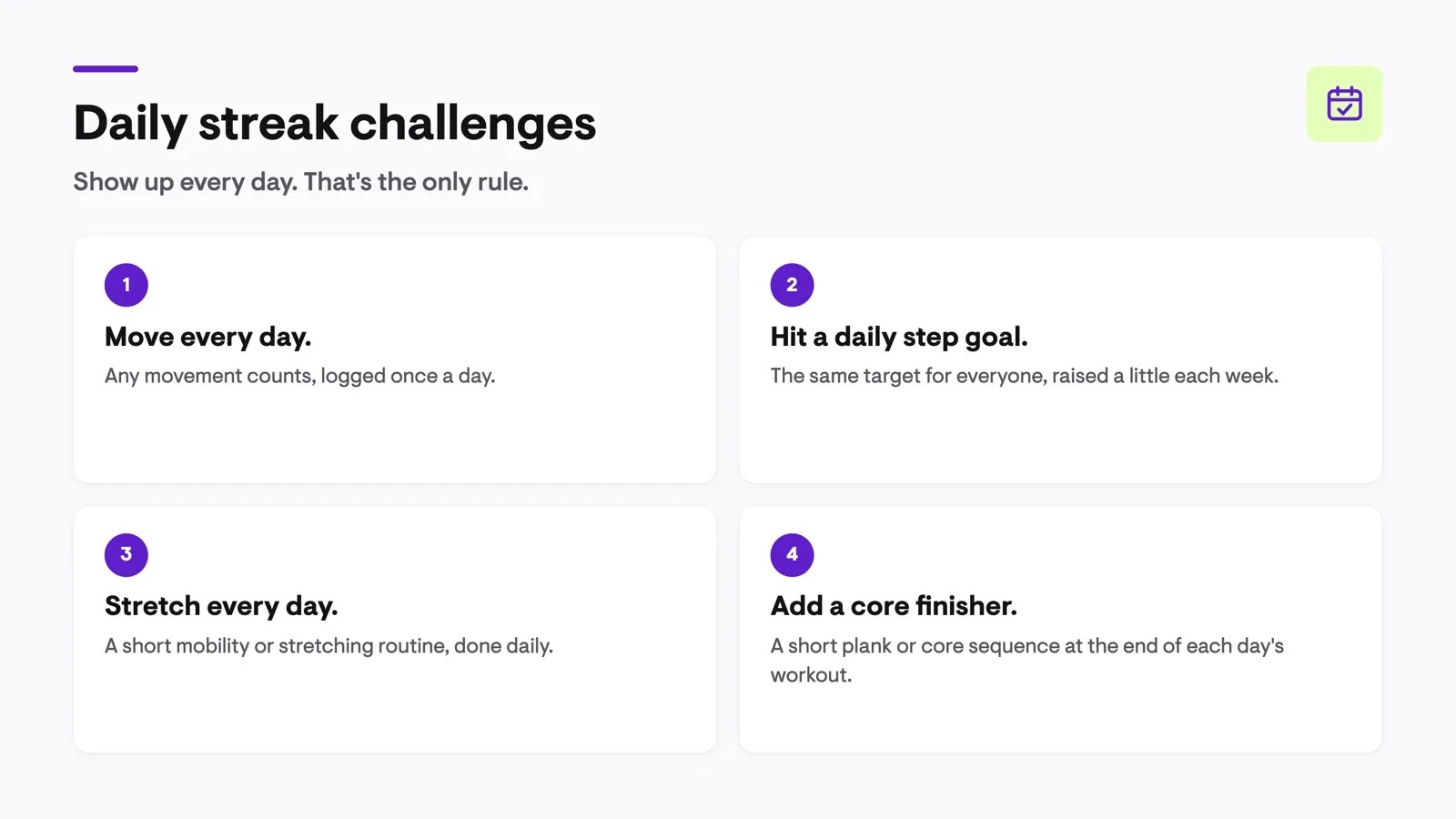
| Daily streak | |
|---|---|
| Best for | Every modality, and easiest for general fitness, HIIT, walking, and mobility |
| Effort to run | Low. Short daily sessions you can reuse, and one check-in a day |
| Growth role | A first sale or a free taster, and an easy reason for a big audience to join now |
| Pros | Easy to explain in one post, and anyone can start |
| Cons | Little to show at the end, and a missed day can feel like the streak is over |
A progressive challenge gets a little harder each week, which makes it the closest thing to a full program.
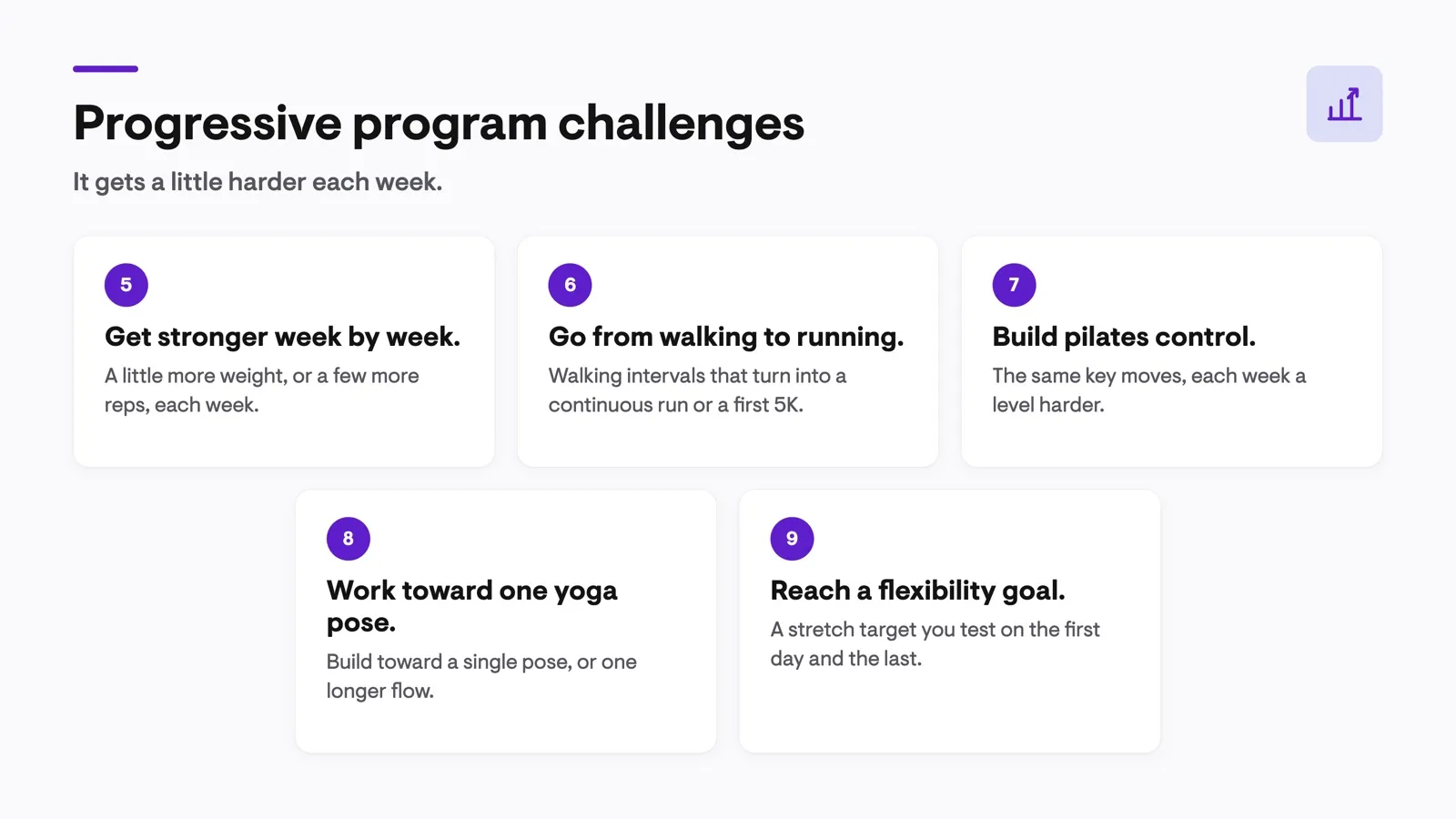
| Progressive program | |
|---|---|
| Best for | Strength and bodybuilding, running, and pilates, and yoga teachers building toward a pose |
| Effort to run | High. A full program that gets harder each week, with a test at the start and the end |
| Growth role | The closest thing to your subscription, so finishers have an obvious next step, and the workouts go into your library afterward |
| Pros | Members see a real change |
| Cons | The most to build. In Playbook’s data, most people who drop a program do it in the first two weeks, so make week one easy |
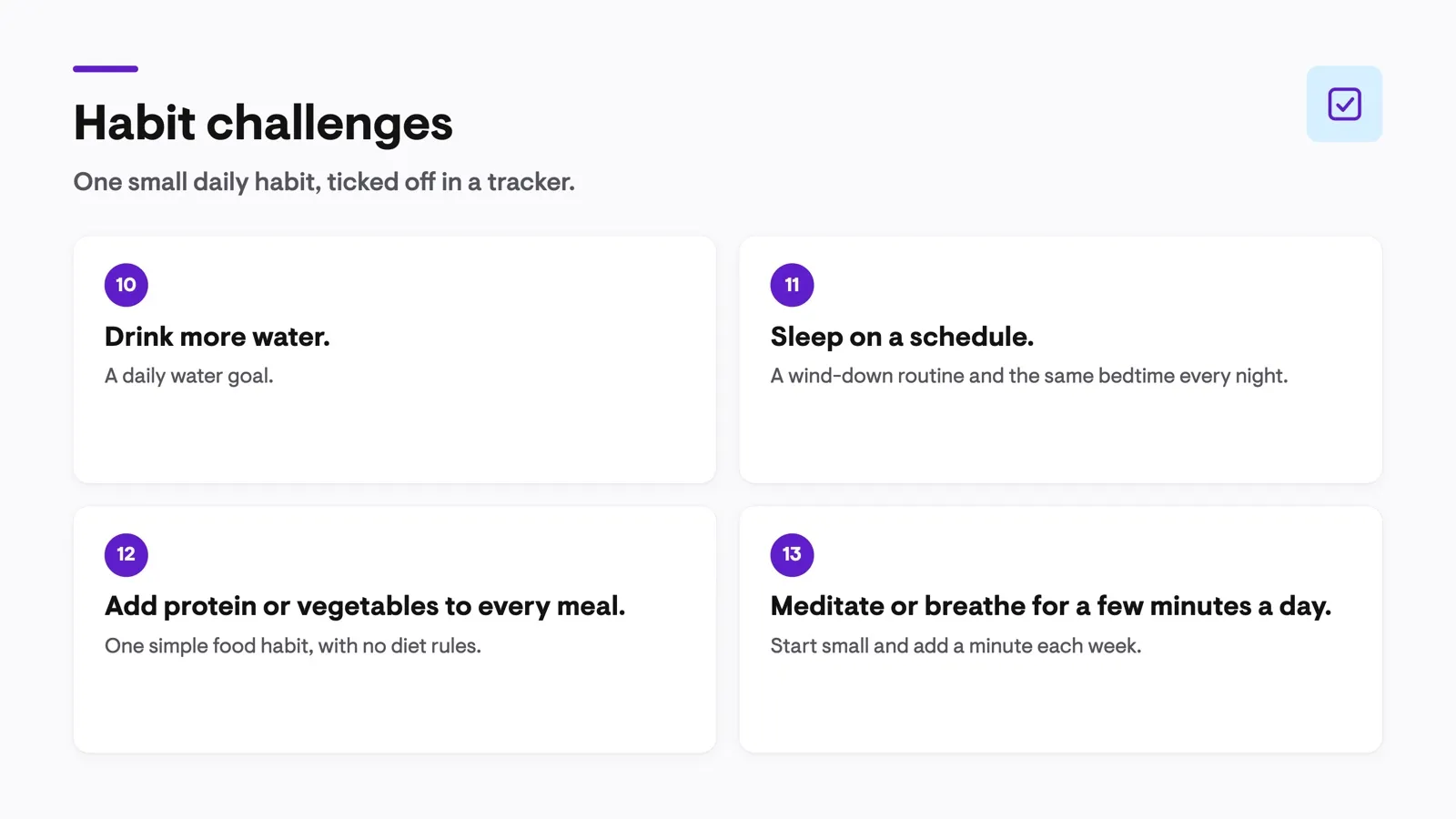
Wellness, nutrition, and mindfulness creators get the most from a habit challenge, and it pairs well with any workout challenge.
| Habit | |
|---|---|
| Best for | Wellness, nutrition, mindfulness, yoga, and pre and postnatal creators |
| Effort to run | Low. A tracker and a short daily prompt |
| Growth role | Lets people join who aren’t ready for a workout challenge yet, and works best alongside a workout or practice challenge |
| Pros | The easiest to join and the quickest to set up |
| Cons | Hard to show a result at the end, so you have less to share when you sell the next one |
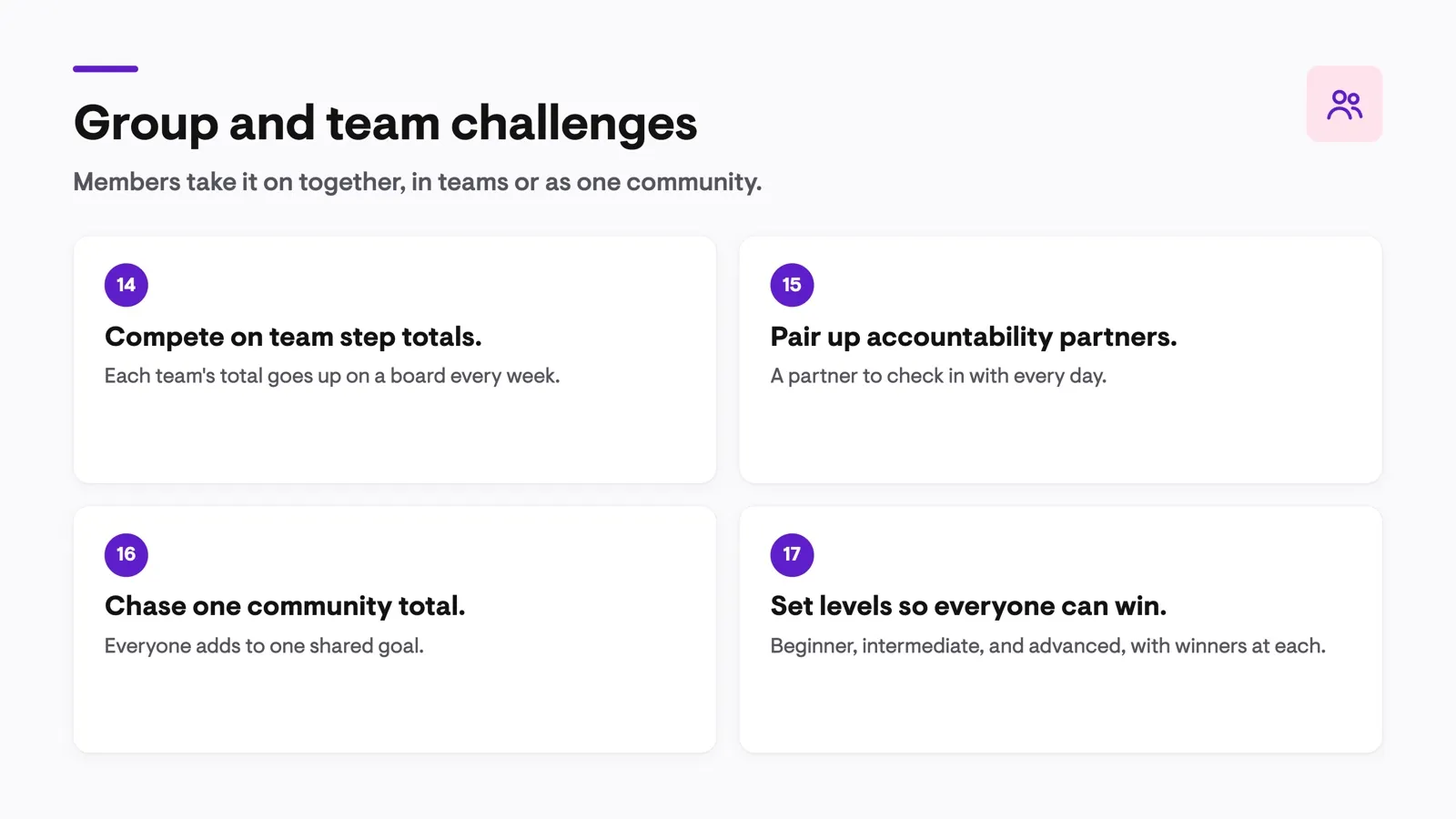
These fitness challenge ideas for groups work best when your audience already talks to each other, and they’re the easiest kind to do with friends.
| Group and team | |
|---|---|
| Best for | Walking, running, cycling, and group fitness, or any creator whose audience already talks to each other |
| Effort to run | Medium to high. Someone forms the teams and updates the totals every week |
| Growth role | People can join with friends, and it works as a layer on another challenge, like teams inside a daily step challenge |
| Pros | Social and fun, and everyone has a part to play |
| Cons | Needs an active audience, a quiet team can drag the others down, and it’s the most admin |
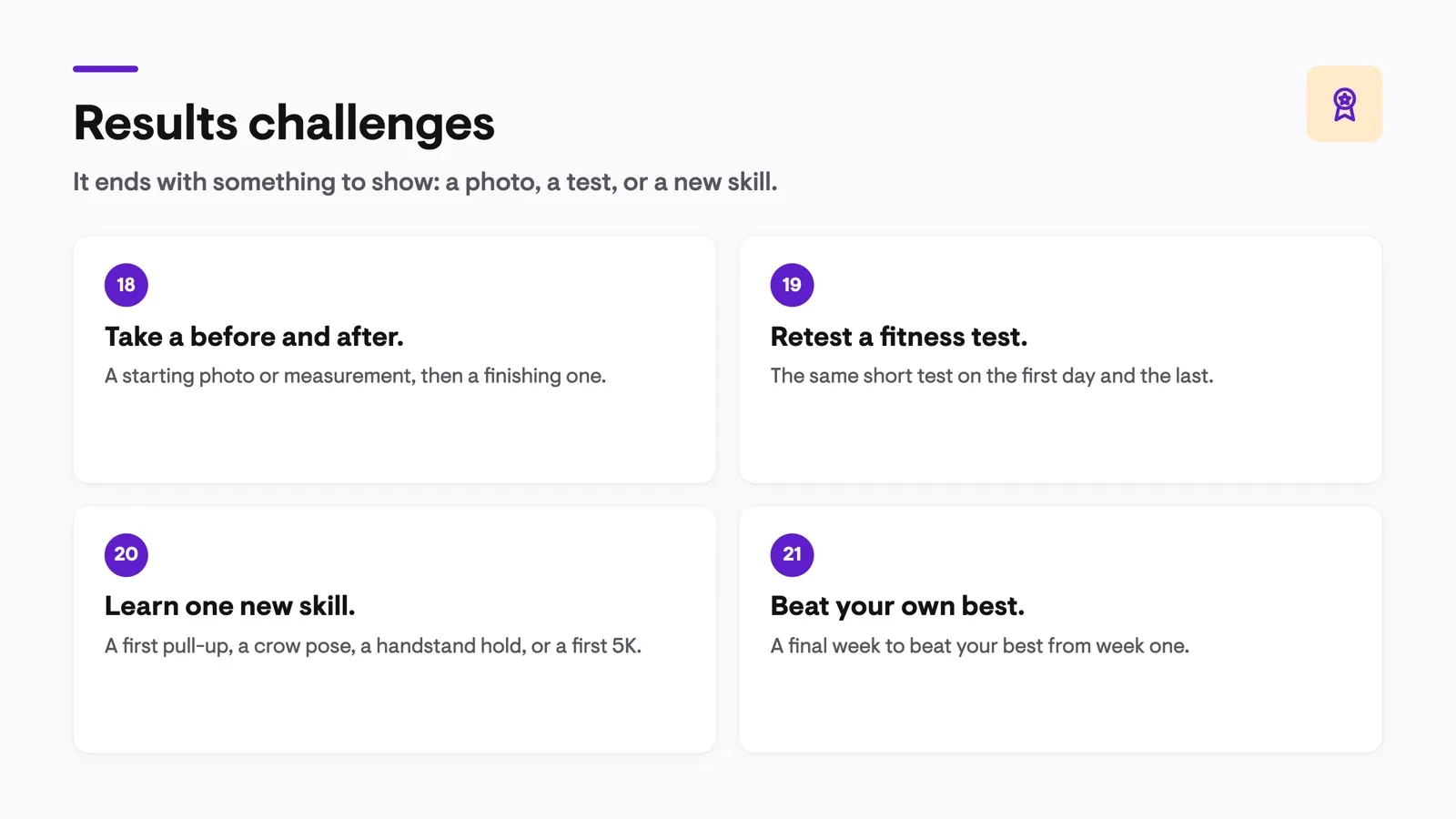
Results challenges end with something to show, so you finish with results to share (with members’ permission).
| Results | |
|---|---|
| Best for | Strength, bodybuilding, HIIT, and general fitness. A skill goal, like a crow pose or a first pull-up, suits yoga, pilates, and bodyweight creators |
| Effort to run | Medium. You collect a starting point and a result, judge any prize, and ask permission to share |
| Growth role | Ends with results you can share (with permission), which is what sells your next challenge |
| Pros | The proof is built in, and a prize fits naturally |
| Cons | Before and after photos can put people off, so offer a fitness test or a skill as well |
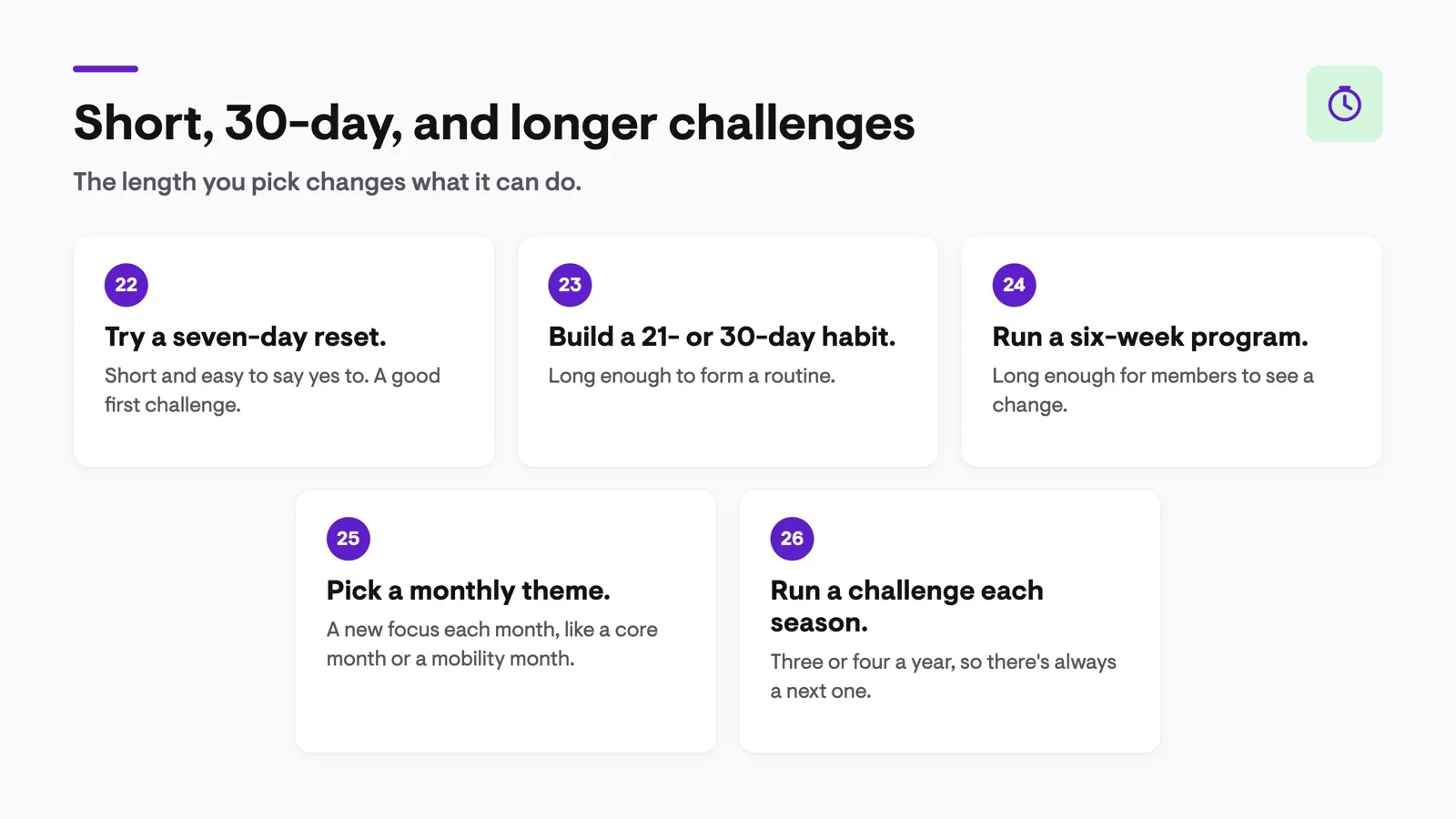
Length changes what a challenge can do, so match it to what you can keep up.
| Short, 30-day, and longer | |
|---|---|
| Best for | Every modality, because it’s about length, not the kind of movement |
| Effort to run | Low for seven days, high for six weeks. Seasonal challenges need dates set a quarter ahead |
| Growth role | A seven-day reset makes a good first sale, and monthly themes and seasonal challenges give subscribers a next one to join |
| Pros | Easy to match to the time you have |
| Cons | Short ones show little change, and long ones take the most to build and keep up |
Choosing between these fitness challenge ideas comes down to three things you already know, or can find out this week.
Has your audience bought something from you before?
What do they tell you they struggle with?
What can you keep up for the whole run?
If you haven’t sold anything yet and want to see the other ways to start, how to make money as a content creator in fitness lays them out.
A fitness challenge should last long enough for members to notice a change, and short enough to finish. In our experience, that’s a few weeks for a habit challenge and about six weeks for a program.
To run a fitness challenge, pick one goal and a length, decide how people get in, set sign-up dates, ask for a starting point, check in every week, and close with results.
Give the challenge one goal you can check on the last day, like moving every day for 30 days or a first full push-up. Then pick the length from the formats above.
People can pay for the challenge on its own, or get it as part of your subscription. Playbook supports both, and you can add a challenge to a program in your subscription or to a one-time program (how to create a challenge).
Only people who’ve paid for the challenge, or have it through your subscription, can register on Playbook. Nobody joins for free unless you decide to give it away.
Open sign-ups a little before the start date, so people have time to hear about it and join. Keep them open into the first week, so late joiners can still get in.
At sign-up, ask each member for a before photo, a quick fitness test, or a written goal, and ask for the same thing at the end. The starting point is what makes the result mean something.
If photos suit your audience, make the after photo a required step. In Playbook’s data, challenges that ask for an after photo tended to have more members finish.
Ask permission before you share anyone’s photos or results. On Playbook, members are asked whether you can repost what they submit.
A prize gives people one more reason to finish. Good fitness challenge prize ideas are money off your annual plan, one of your other programs for free, a prize from a brand you work with, or cash.
Say exactly what members have to do to be in the running, like finishing every week and sending a before and after photo. You don’t need a prize at all, though. The result can be the reward.
Check in once a week and share members’ progress (with their permission). If you don’t run live calls yet, we recommend a group call during each challenge.
A printable tracker helps with daily streak and habit challenges, and on Playbook you can add one to the challenge for members to download.
Open a window at the end for members to send their results, and celebrate the people who finished. Then tell them what comes next, before they drift off.
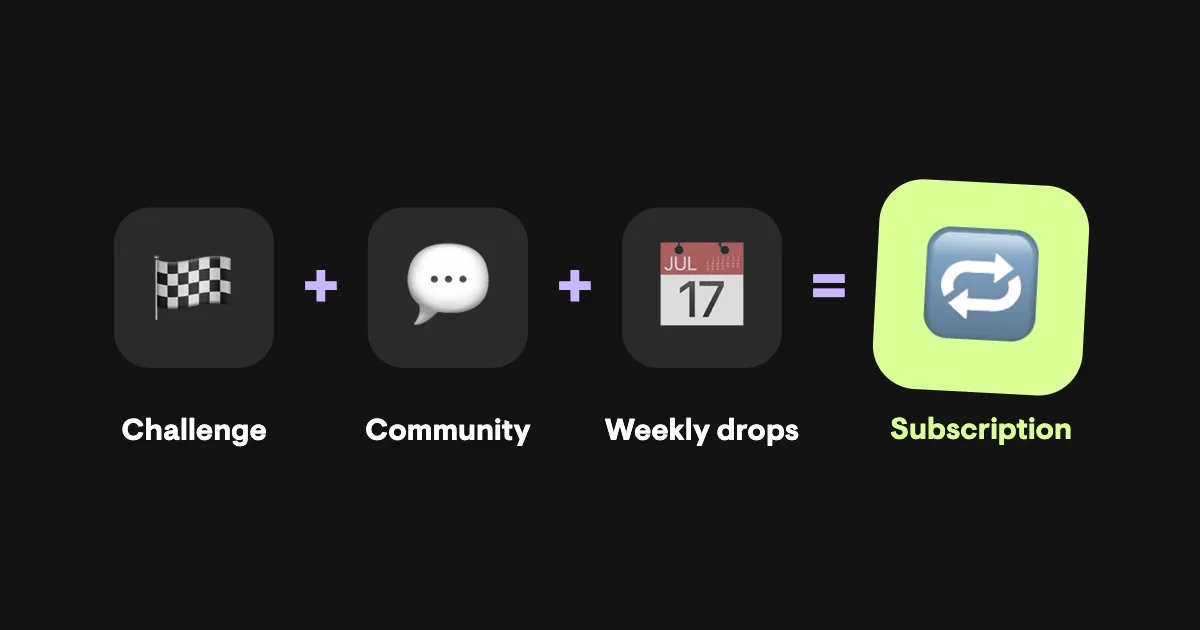
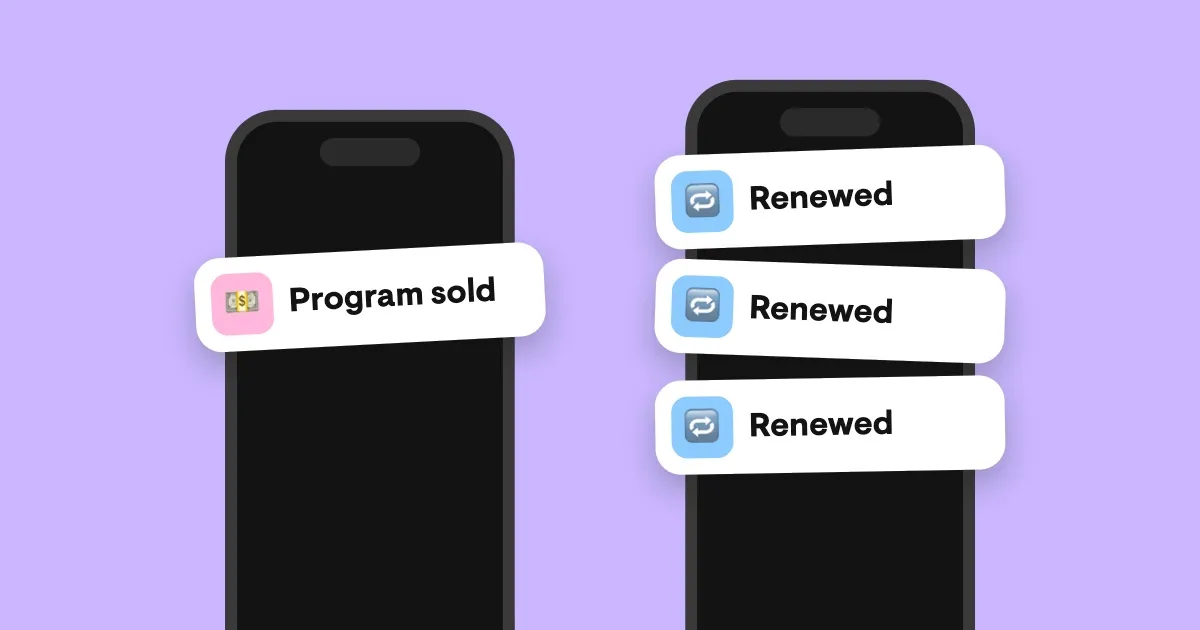
A paid challenge makes money once. A challenge inside your subscription keeps people paying after it ends.
Sold as a one-time program, a paid challenge is a good first sale and a good way to test an idea. But the money stops on the last day, and the next challenge starts from zero.
Inside your subscription, a challenge gives people a reason to join now and a reason to stay. In Playbook’s data, new members who join a challenge in their first month are more likely to still be subscribed three months later. People who join a challenge may be more motivated to begin with, so the challenge may not be the whole reason they stay.
If you’ve sold something before, we recommend running your challenges inside your subscription. If you haven’t, a paid challenge is a good place to start, as long as a subscription is ready for the people who finish. Fitness subscription vs one-time program goes through when each one fits.
Don’t count on one challenge to bring a rush of new members. What it does well is give the people already watching you a reason to join now, and keep the ones who join.
That holds whichever kind you pick. In Playbook’s data, no kind of challenge reliably brought in more new members than the others, and members who joined stayed longer with every kind.
The reason to join now comes from real dates. We recommend an early offer that gets smaller as the start date gets closer, and pairing the challenge with your annual plan, so people who join for the challenge stay for the year.
Use only the dates that are real: the day sign-ups open, the day the challenge starts, and the day sign-ups close.
Sell your challenge inside the posts you already make, with one clear next step. Your feed keeps giving people workouts and ideas, and the challenge shows up as the obvious thing to do next.
On Instagram stories, that looks like this:
The same moments work on a video channel, in a group, or with your email list. Tell your email list at each one, in plain words.
For a weekly selling routine that runs all year, see how to sell fitness programs online.
Creators tell us the hardest part of a challenge is the day after. The people who finished drift off, and the next challenge starts from zero.
Lead finishers into your subscription, where there’s always a next workout and challenges come back a few times a year. How to turn a fitness challenge into a subscription covers it step by step, from reusing the challenge’s workouts to inviting the people who already bought it.
The fun ones usually have a team, a shared goal, or a new skill to show at the end. Try team step totals, one community total everyone adds to, or working toward a first pull-up or a handstand hold. Beginner, intermediate, and advanced levels give everyone a chance to win.
Any daily streak or habit idea fits 30 days, like moving every day, a daily step goal, a daily stretch, or a water goal. Thirty days is long enough to form a routine and short enough to finish.
We recommend charging for it, or running it inside your subscription, so the challenge earns money and the people who finish have a reason to stay. A short free challenge, like a seven-day reset, can work as a taster before your first paid offer.
Run each challenge in the same shape: sign-ups, the challenge itself, then results. It gets easier each time you repeat it.
Running a challenge can feel stressful every single time, creators tell us. Reuse the workouts you’ve already made and improve them, so each round starts from what worked last time.
Let members’ results and feedback shape the next one. They’ll tell you what to keep, what to cut, and what they want to try next.
Playbook lets you run a challenge inside your subscription or sell it as a one-time program, in an app built for fitness creators and their members. Every creator gets the community, with group coaching calls, courses, and templates, and Playbook also has a team of fitness business experts that helps creators launch and grow. It’s free to start, and Playbook takes 20% only when you earn.
Start today. Especially if you don’t feel ready. Fear of failure kills fitness businesses before they even start. Sign-up’s quick and easy. You don’t pay a cent till you make a sale.