Monetize
How to turn a fitness challenge into a subscription

Eden Metzler
Subscription vs. one-time program: why a subscription wins once you're ready, three questions to check if you are, and where to start if not.
If you’re a fitness creator weighing a subscription vs. a one-time program, sell a subscription once you’re ready for it. Ready means you’ve sold something before, you can add new workouts every week or two, and you’re ready to show up in a community.
Not there yet? Start with a one-time program or a challenge, and plan to move your buyers into a subscription when the program ends.
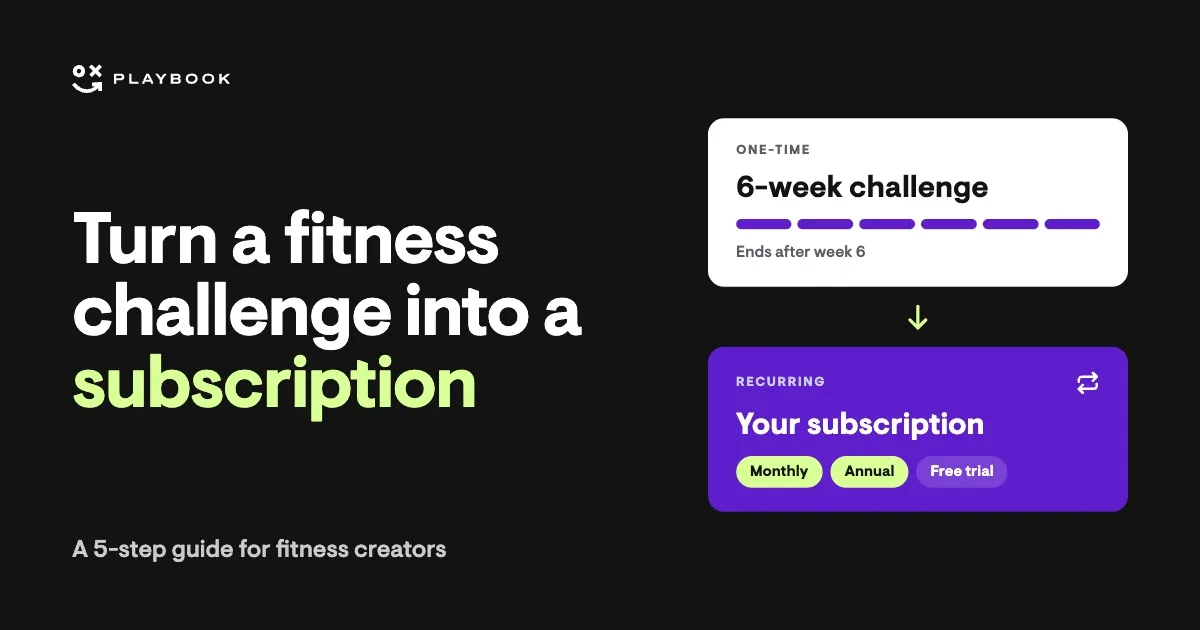
A one-time program is a plan people pay for once. It has a start and an end, like a six-week strength program.
Then there’s the subscription, a plan people pay for every month. It keeps going, like a Pilates library with new classes each week, and subscribers stay for as long as they get something from it.
The table shows what a subscription vs. a one-time payment changes about your month.
| One-time program | Subscription | |
|---|---|---|
| How you get paid | Once per buyer | Every month, per subscriber |
| What people get | A set plan with a start and an end | Ongoing access that keeps growing |
| What you owe them | The program, delivered | New content, and a reason to keep showing up |
| Your income | Comes in when you release a program, then stops | Builds month after month as subscribers stay |
| When it ends | After the last workout | When the subscriber cancels |
| How they fit together | Brings new people in | Where buyers go when the program ends |
With one-time programs, your income starts over every time a program ends. To earn the same next month, you need a new group of buyers, so every month begins with finding people to sell to.
A subscription works the other way. The people who joined last month are still paying this month, and every new subscriber adds to that, so your income grows as subscribers stay. That’s why over 90% of the money creators make on Playbook comes from subscriptions.
You stop selling a new program to a new crowd every few weeks. Your subscription becomes the main thing you sell, a little in everything you post, and a one-time program, if you keep one, becomes a way in.
And more of your time goes to the people already paying you, with new workouts, the community, and the next challenge. That work is what keeps them subscribed.
A subscription gives you steady income. Steady work, too.
Many creators we talk to expect a subscription to run itself once it’s live. It doesn’t. Subscribers stay when there’s something new to do and they can see themselves getting better.
In a normal month, that means:
(You don’t have to write every one of those messages by hand. Our post on lifecycle marketing for fitness creators covers the ones worth setting up once.)
Work through these in order. Stop when you land on an answer.
1. Have you sold anything to your audience before? A guide, a challenge, a program, anything they paid for.
2. Can you add new workouts or classes every week or two?
3. Are you ready to show up in a community every week? Answering questions, checking in, and cheering people on.
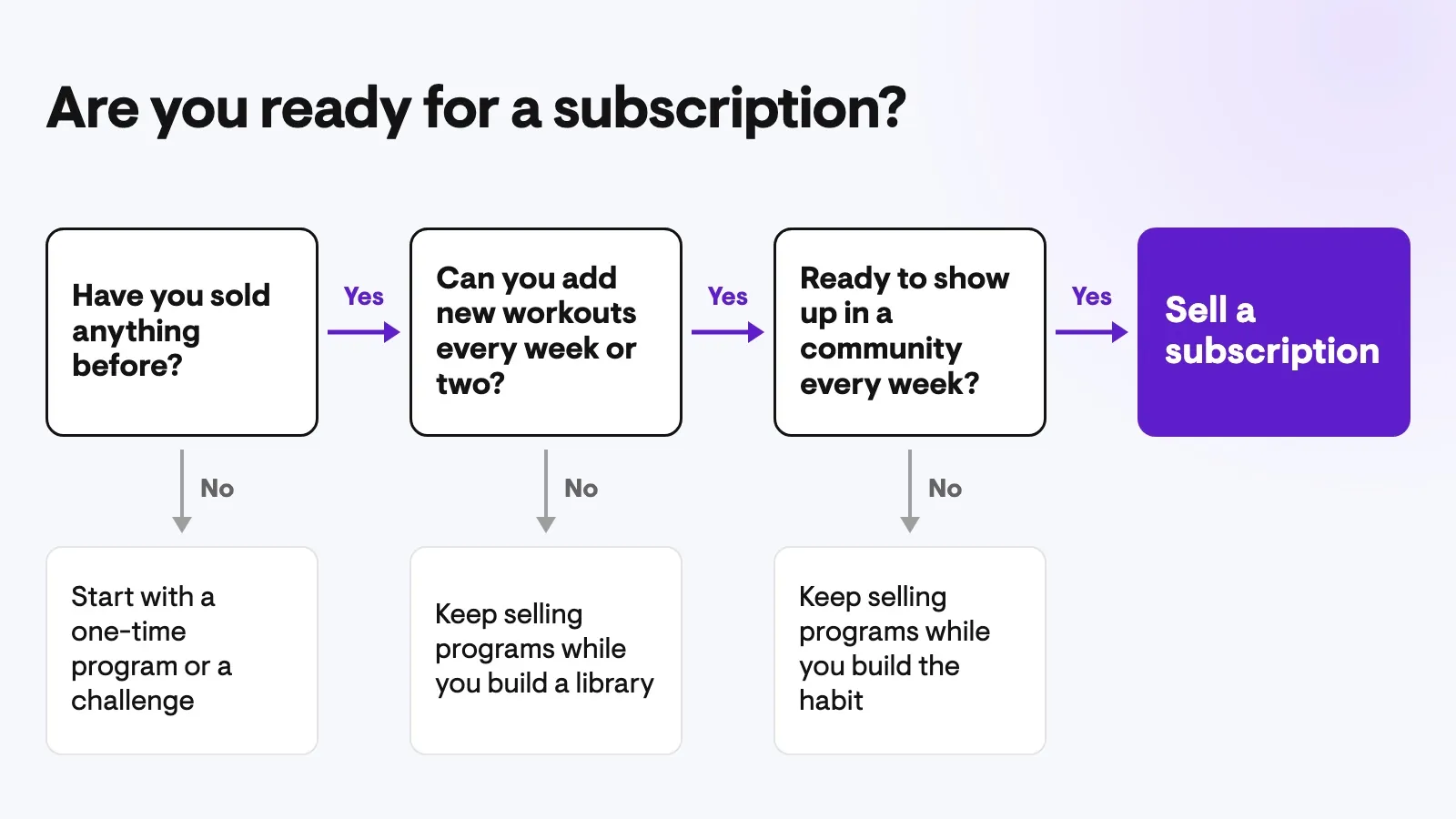
If you’ve never sold anything, a one-time program or a challenge is the easier first step. It’s one clear offer with an end date, and it shows you who will pay before you commit to adding content every month. That’s what we recommend to creators at Playbook.
Where did you land? If it’s a one-time program, the next section covers how to make it lead into a subscription.
If you start with a one-time program, its last week is the best moment to offer what comes next. Your buyers have paid you, shown up for weeks, and seen results. They’re the people most likely to stay.
But most of them move on unless you give them somewhere to go. Creators who sell one-time programs ask us all the time whether these buyers will pay every month.
Some will. More will when the subscription feels like the next step in what they’re already doing.
Put one line on your sales page and in your welcome message about what happens after the last week, like “When you finish, you can move straight into the next phase.”
Buyers who know there’s more coming plan to keep going. If they think it ends at week six, nothing pulls them toward week seven.
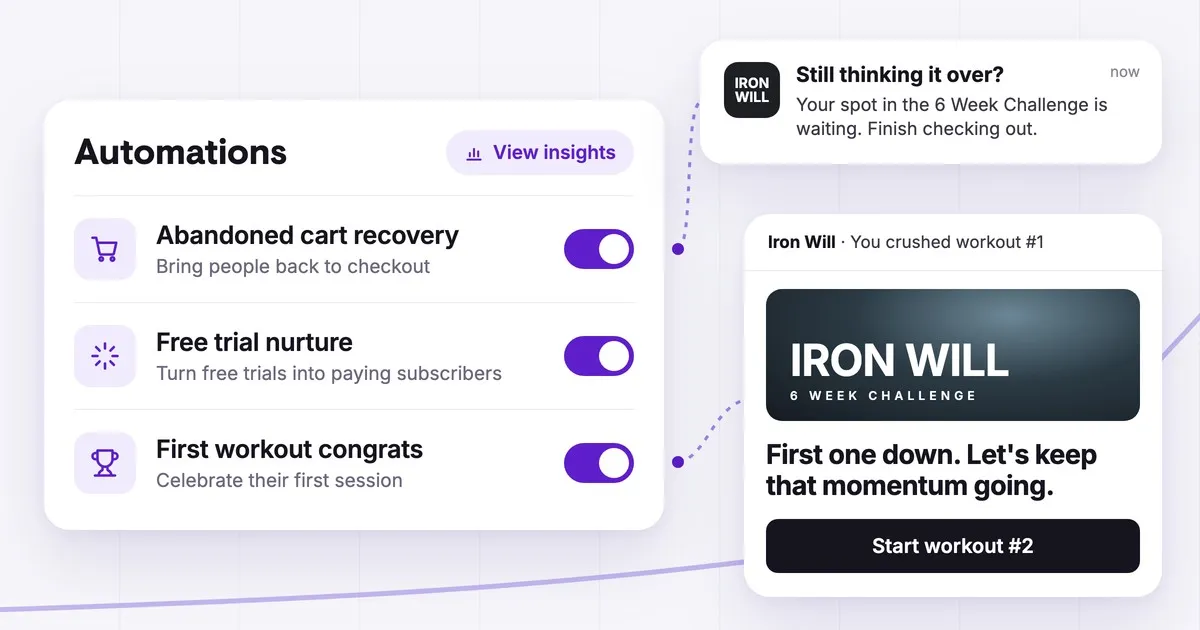
On Playbook, the One-time buyer to subscriber automation invites new buyers who aren’t already subscribers to join your subscription, a few hours after they buy. It’s off until you turn it on, and it only reaches people who buy after that.
That first invitation lands at the start of the program, before they’ve seen results. So don’t stop there. Make your own offer in the last week too.
A short challenge gives one-time buyers a taste of showing up with a group, week after week. That’s what a subscription feels like. Our guide on how to turn a fitness challenge into a subscription covers it step by step.
It could be a 21-day yoga challenge for people who finished your beginner flow, or a four-week strength block after your six-week program. End it by inviting everyone who finished into your subscription. (It’s easy to reach day 21 with no plan for the finishers. The bridge only works if it leads somewhere.)
Send your offer while people are still working out. Once they’ve stopped, it’s much harder to get them started again.
Make it sound like the next step in their program. “Your next phase starts Monday” works better than “Join my membership.”
A good last-week message covers these things:
You already have an audience. Selling to it comes down to four steps.
On Playbook, a one-time program can sit on your channel page alongside your subscription, so buyers find both in the same app. For selling a little in everything you post, see how to sell fitness programs online.
A subscription, once you’re ready for it, because your income builds as subscribers stay instead of starting over with each program. A one-time payment is the easier first sale, so if you’ve never sold anything, start there and add the subscription next.
Yes, and they work well together. The one-time program brings new people in, and the subscription is where they go when it ends. Tell buyers about the subscription on day one, and make the offer in the last week.
Some will, and more will if the subscription is clearly the next step. Tell them about it on day one, invite them again in the last week while they’re still active, and use a challenge as a bridge if you want one.
No, you can start with a PDF or a shared folder. But in our experience, people are more likely to finish a program they can follow on their phone, with the videos and their progress in one place. And the people who finish are the ones who stay for what comes next.
Yes. A subscription needs new content and attention every month, while a one-time program is mostly work up front. That’s why we suggest starting with a one-time program if you’re new to selling, and adding the subscription when you’re ready to keep adding content.
Whichever you start with, the subscription is what keeps paying. It keeps paying because you keep adding to it, with new workouts on a set day and a community you show up in. So if you sell a one-time program, write down where buyers go when it ends before anyone buys.
If you’d like help running both, every creator on Playbook gets the community, with group coaching calls, courses, and templates. Playbook also has a team of fitness business experts that helps creators launch and grow. The app is built for fitness and wellness creators, with one-time programs and subscriptions in the same place, and there’s no upfront cost.
Start today. Especially if you don’t feel ready. Fear of failure kills fitness businesses before they even start. Sign-up’s quick and easy. You don’t pay a cent till you make a sale.