Product Updates
What's new on Playbook: recent updates and what's coming next

Jaimie Chapman
How to sell fitness programs online: offer a subscription, price it monthly and annually, and sell it a little in everything you post.
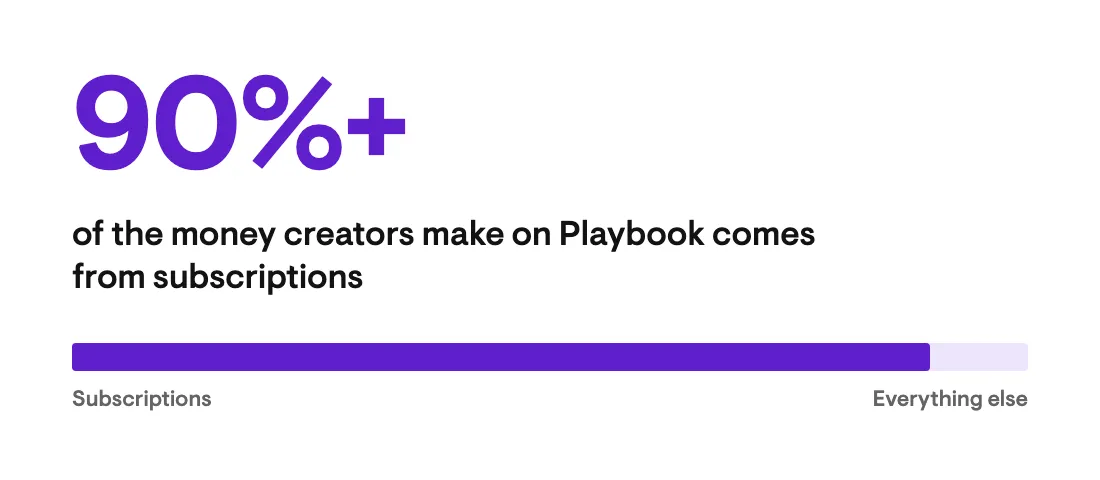
Most creators who sell fitness programs on Playbook sell a subscription, not a one-off plan. In fact, over 90% of the money creators make on Playbook comes from subscriptions.
It’s the same whether you’re a personal trainer, a coach or a fitness instructor (yoga and pilates teachers included) selling fitness programs online. And the ones who do it well sell a little in most of what they post.
A one-off program ends, and so does the money from it. People buy, they finish, and next month you’re starting from zero.
With a subscription, the money keeps coming while you add new workouts, classes and programs.
So if you’re working out how to sell workout plans online, put the plan inside the subscription. Each new one gives people another reason to stay, and so does a community (see how to run a community that keeps subscribers paying).
Start with a challenge or a short program if you’ve never sold anything before, or you’re still working out how to start an online fitness business. Give it a start date, then offer the subscription to everyone who finishes. By then they know how you teach (and whether your early-morning flow or your lunchtime strength session fits their week).
Playbook’s one-time buyer to subscriber automation does that last step for you. It invites anyone who buys a one-off program to join your subscription.
Challenges also keep people around. On Playbook, they deliver twice the retention of non-challengers.
Pricing isn’t one size fits all. The setup that works is two plans side by side, with a free trial in front of both:
| Plan | Who it suits | Why offer it |
|---|---|---|
| Monthly | People trying you out | It’s the easiest first yes |
| Annual | People who already know they’ll stay | Better value for them over a year, steadier income for you |
| Free trial | Anyone on the fence | They see the program, or the classes, before they pay |
Price the annual plan below 12 monthly payments, so it’s clearly the better deal.
Monthly is still the easier first yes. But you don’t have to choose between them. On Playbook, the monthly to annual upgrade automation invites monthly subscribers to switch to annual before their next renewal, and shows them what they’d save.
The trial earns its place, too. Over half of free trials on Playbook convert to paid, and we’ve written more about whether to offer a free trial.
You don’t need separate sales posts. Keep posting what you already post (a workout, a recipe, a flow, a tip, your story) in your feed and your stories, and end each one with one clear next step. Save promo-only posts for the rare times you need them.
Three things make an everyday post sell:
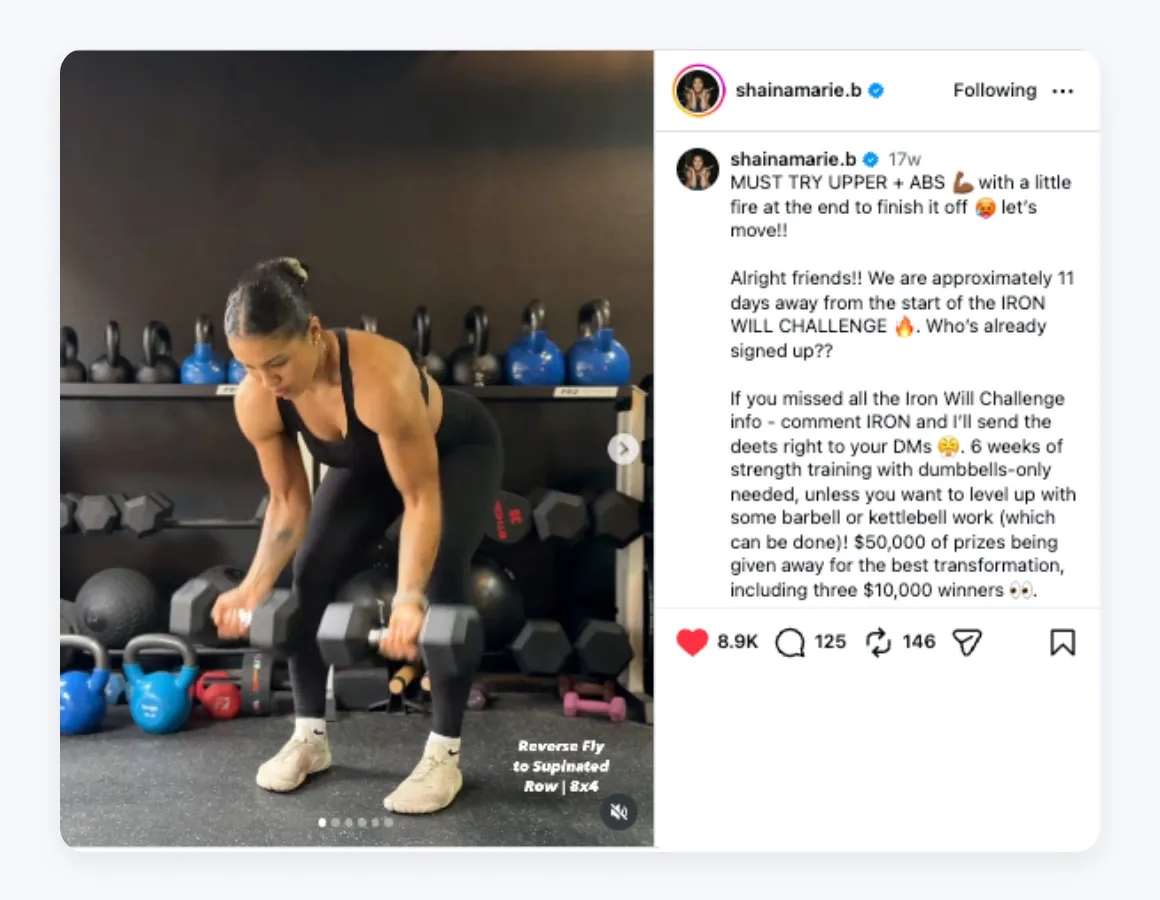
shainamarie.b does this with workouts. Her post is a full upper body and abs workout people can save and do, and the caption asks them to comment IRON for the details on her next challenge.
The same goes if you’re working out how to teach yoga online. A short flow for tight hips with a next step at the end will sell more than an announcement post.
It’s also how you keep your page from feeling salesy. When most of what you post is useful, the next step reads as an offer.
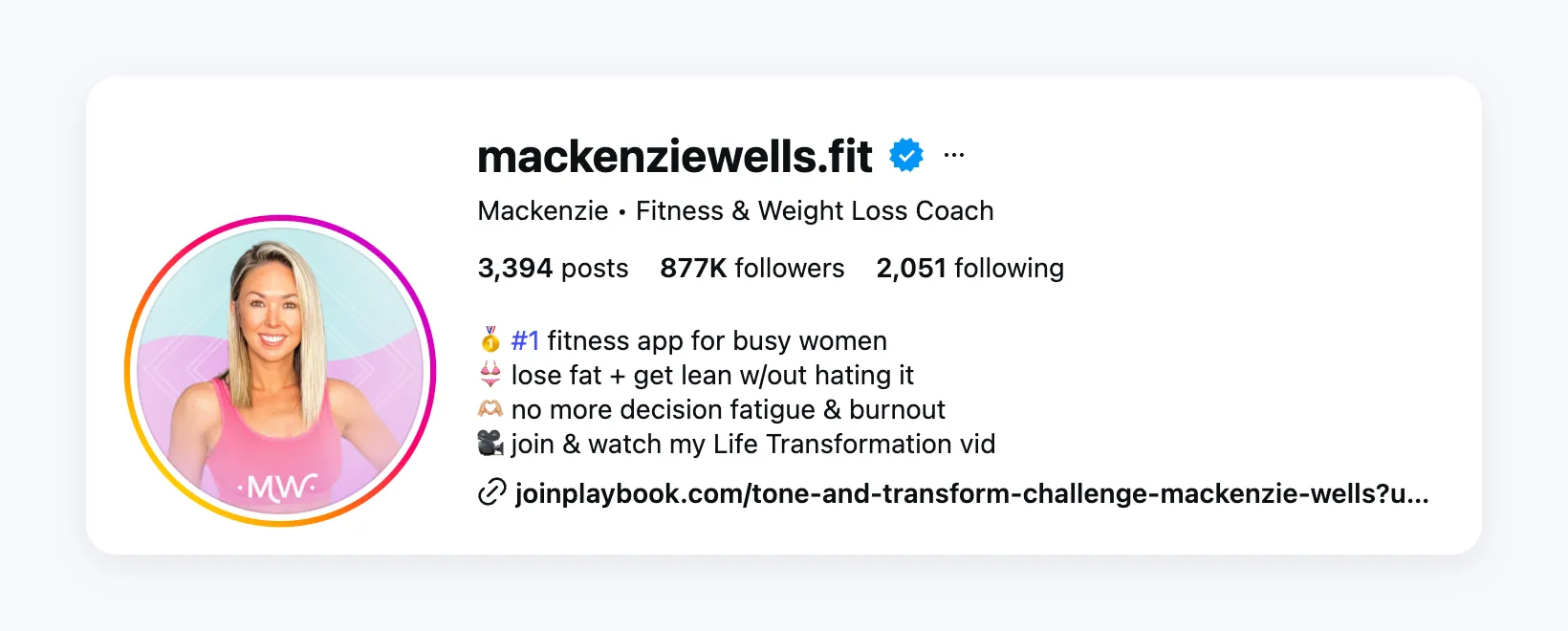
Your bio sells every day, to everyone who finds you. Say who you help and what they get, and make the last line the next step. Then use one link, pointing to the offer.
“Comment READY to get your free week of home workouts!” That line on an Aubri and Liv video turns a post into a conversation without you chasing anyone. A line like it is on most of the selling posts our creator team shares as examples.
To set one up:
Use a different word for each offer, like a free workout, a free week or the subscription itself, so you can tell which one people want. If you don’t have a free offer yet, start there (we’ve covered free offers that turn followers into subscribers).
Then let ManyChat do the converting. It sends the link the moment someone comments, while they’re still interested.
Morgan Tyler’s caption shows how it reads in practice. It speaks to women over 30 who are tired of crowded gyms, gives the whole circuit with the timing, and ends by asking people to comment COZY for details on her six-week challenge.
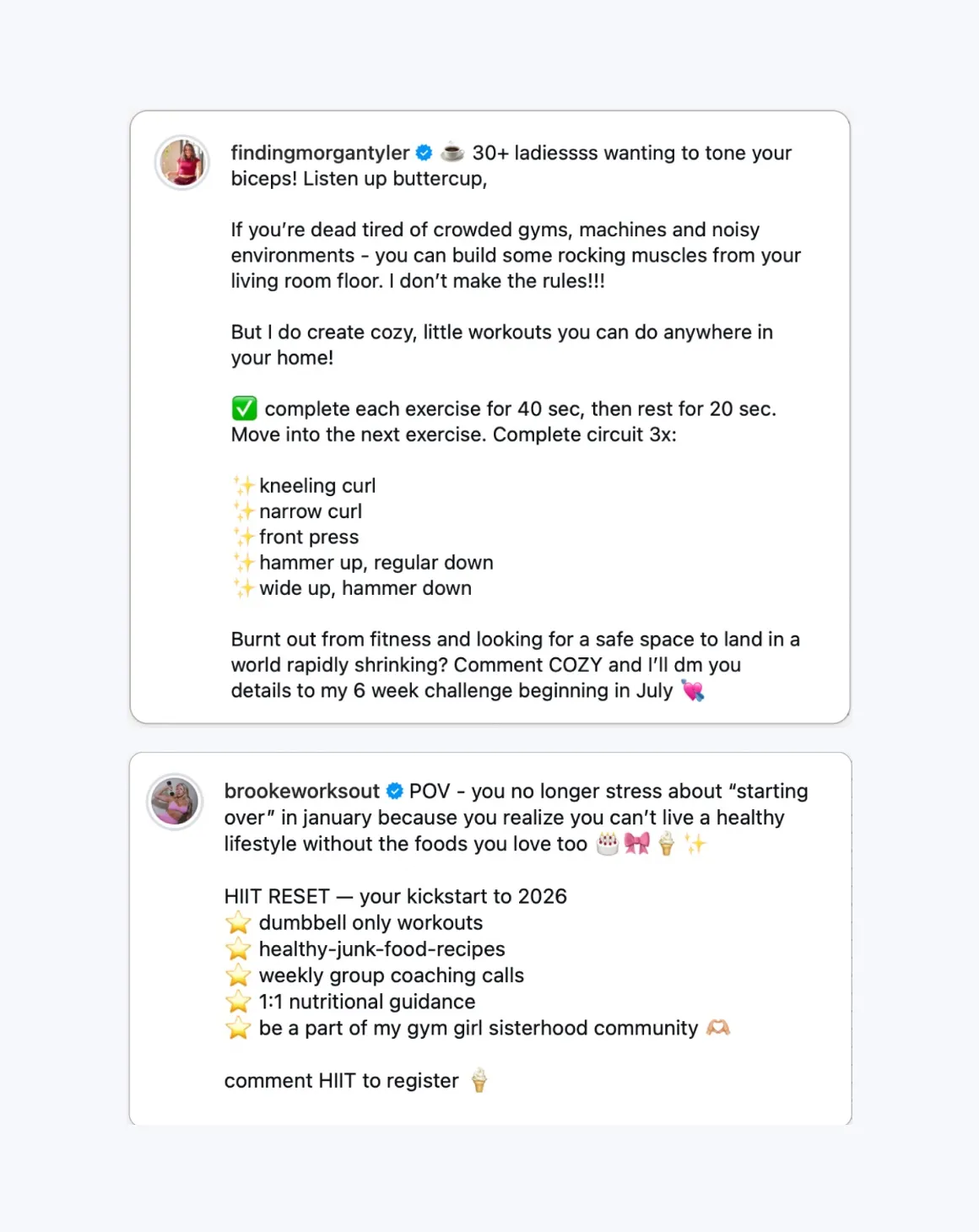
It’s also how a lot of coaches sell online personal training. The DM is where a question turns into a sale.
No automation? A saved reply does the same thing by hand.
Posts start conversations. Stories keep the offer in view between them, every week, without a hard sell. Use a mix you can repeat:
| What to share | Why it sells | Example |
|---|---|---|
| Behind the scenes of what you’re making or adding | People see it come together and want in | Nick Bare filming exercise videos for his app |
| A poll or a short survey | You learn what to make, and the people who answer are invested | The survey stories below |
| A Q&A | You answer the questions that stop people buying | ”How long are the workouts on the app?” |
| Proof | Other people saying it lands harder than you saying it | A subscriber’s message, a DM or comment, your own progress |
| A taste | People try before they pay | A free workout or class from the program, with a link |
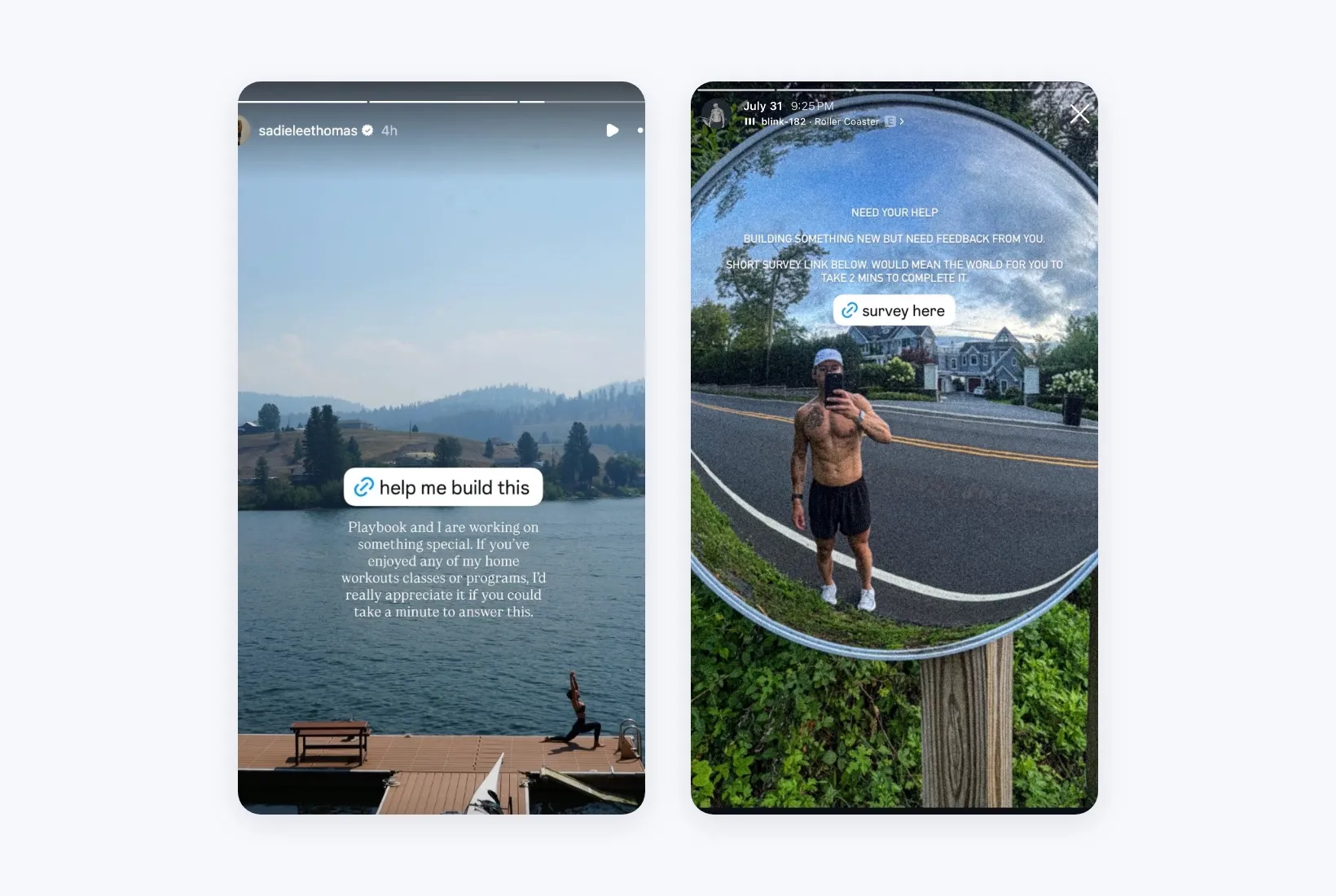
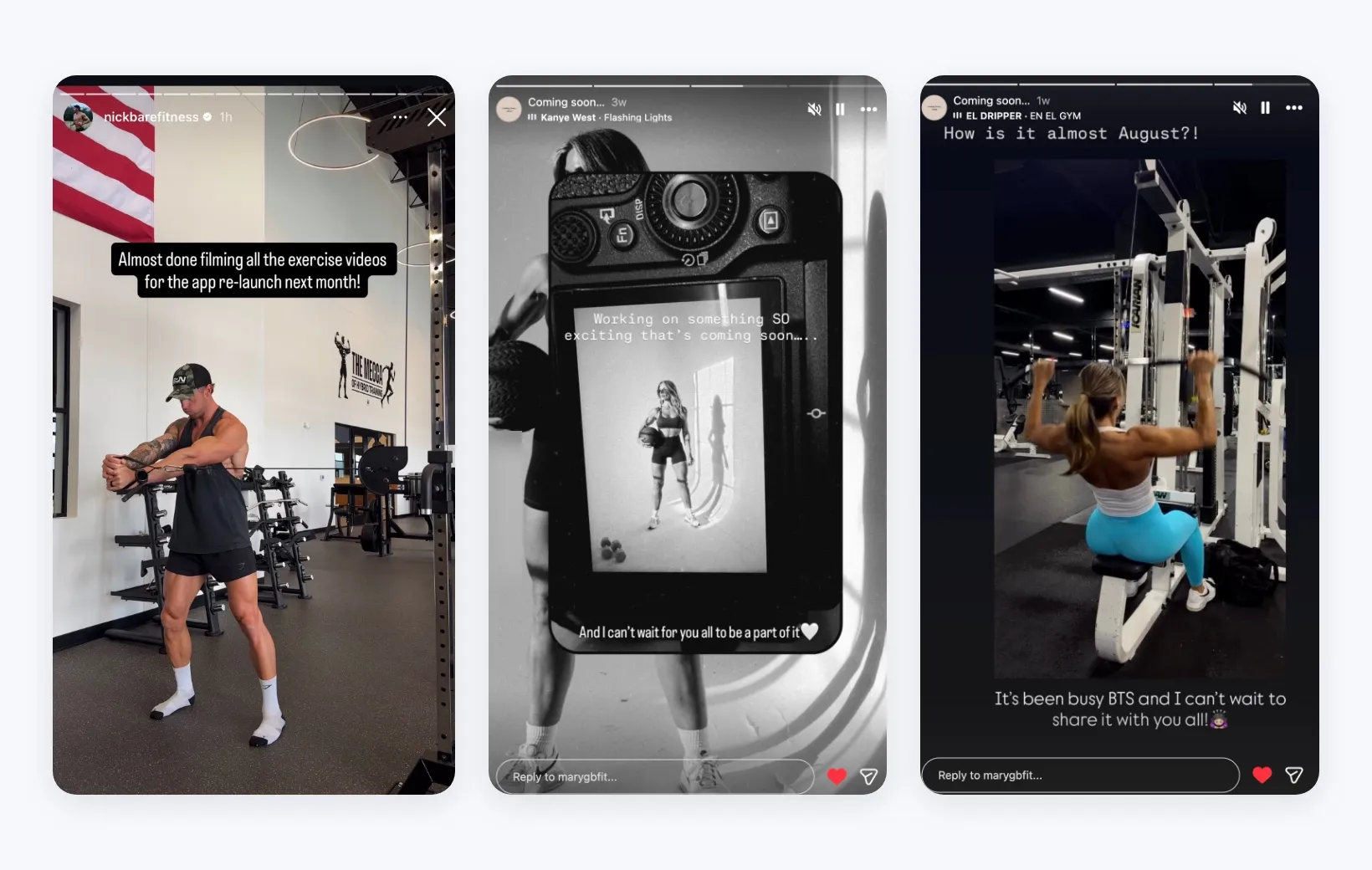
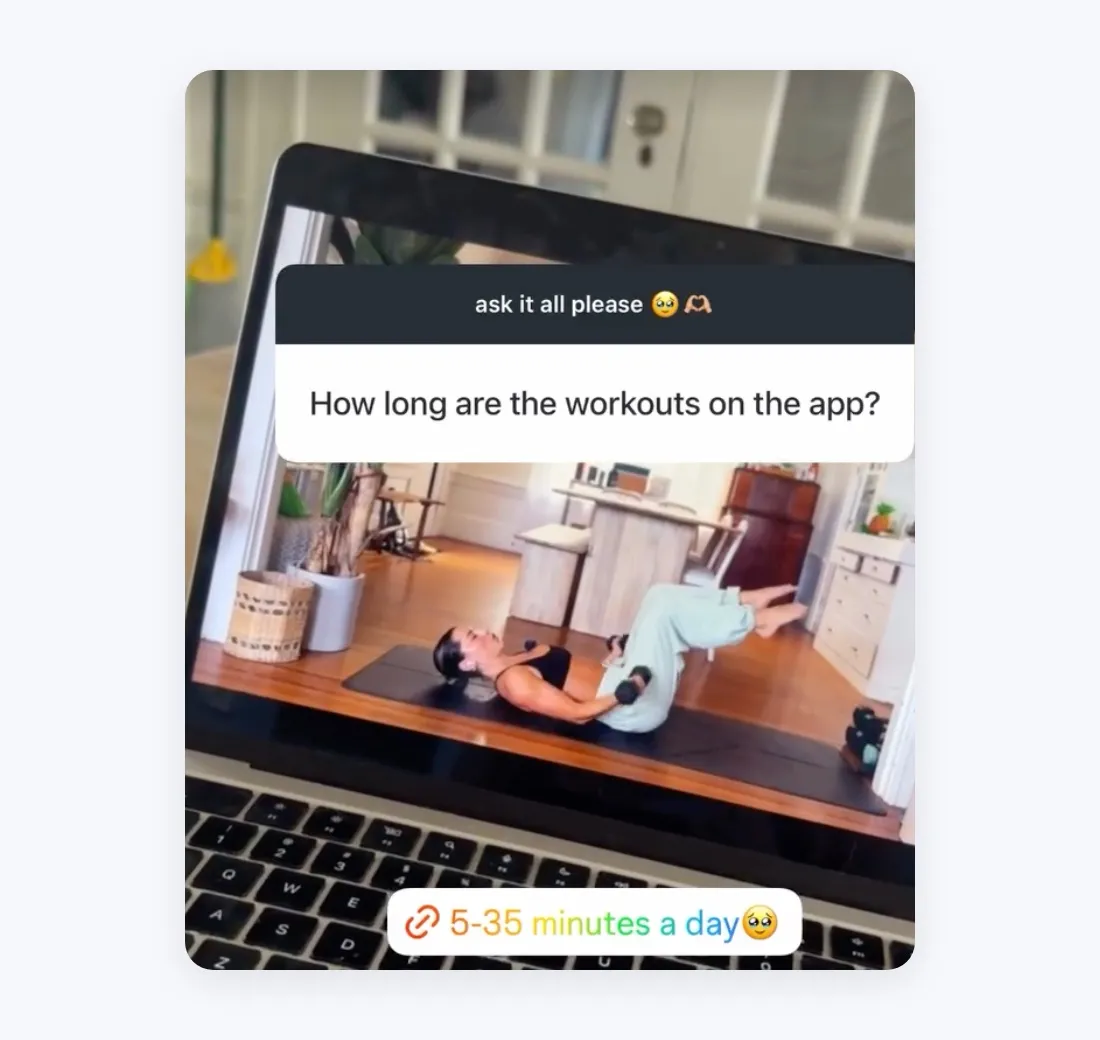
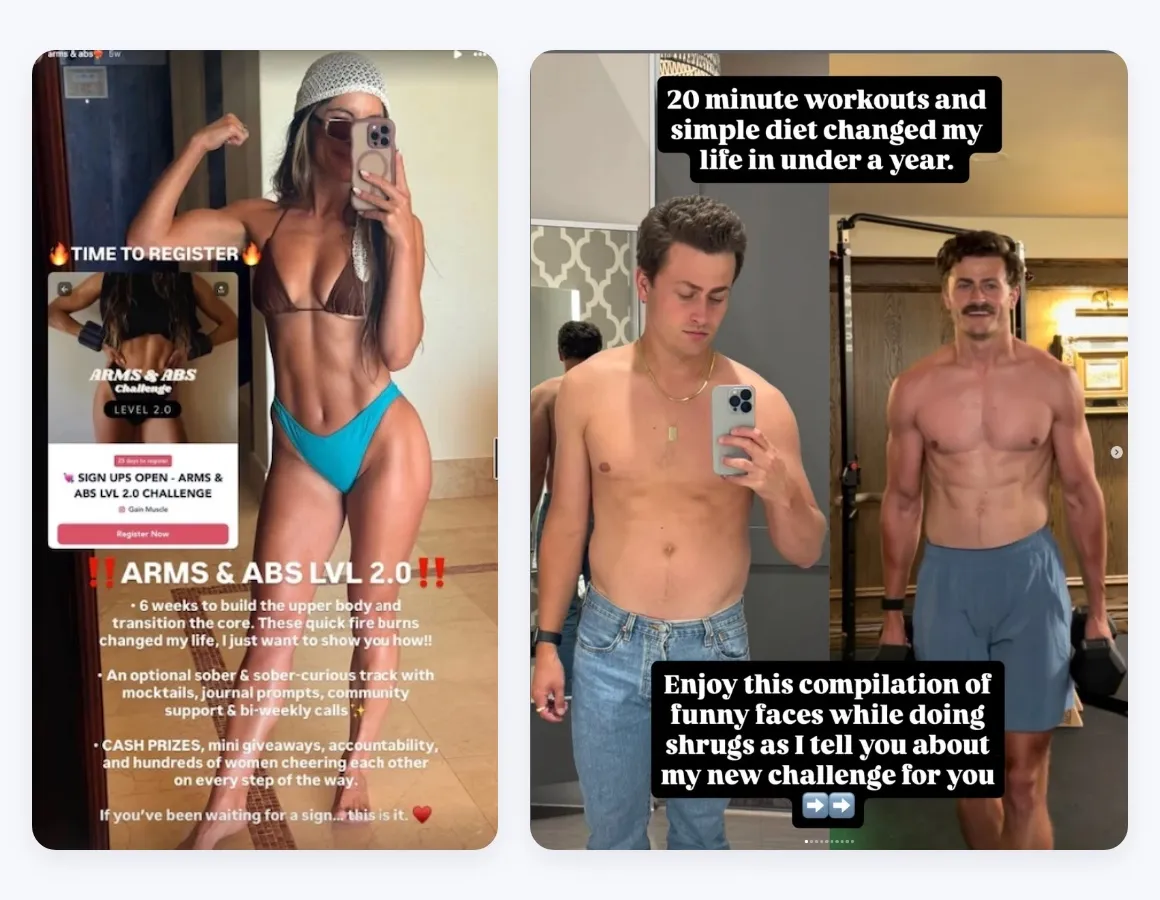
Always on doesn’t mean there’s never a push. A few times a year, host a challenge with a set number of weeks, a start date, and a reason to finish together. Run it inside your subscription, so everyone who joins is a subscriber when it ends.
Each challenge needs:
Close sign-ups when you said you would. If the deadline moves, people stop believing the next one.
A subscription keeps paying as long as you keep adding to it. People stay for new workouts or classes on a regular day, a community you show up in, and challenges that give them something to work toward. That takes real work, and it’s the work that keeps people subscribed.
From what we see, the creators who’ve put in that work spend most of their energy on social media and promotion, which is where the selling in this guide happens.
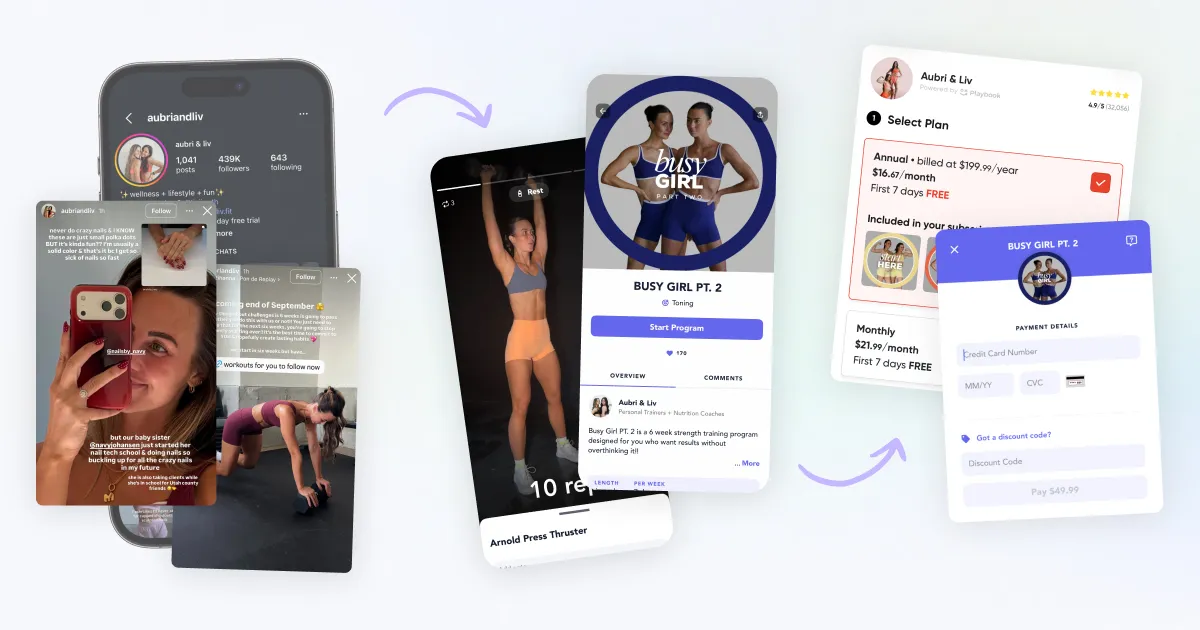
If you’d like somewhere to sell, Playbook is a purpose-built app for fitness and wellness that helps you turn followers into subscribers and keep them. Playbook also has a team of fitness business experts that helps creators launch and grow. There’s no upfront cost.


Start today. Especially if you don’t feel ready. Fear of failure kills fitness businesses before they even start. Sign-up’s quick and easy. You don’t pay a cent till you make a sale.