Monetize
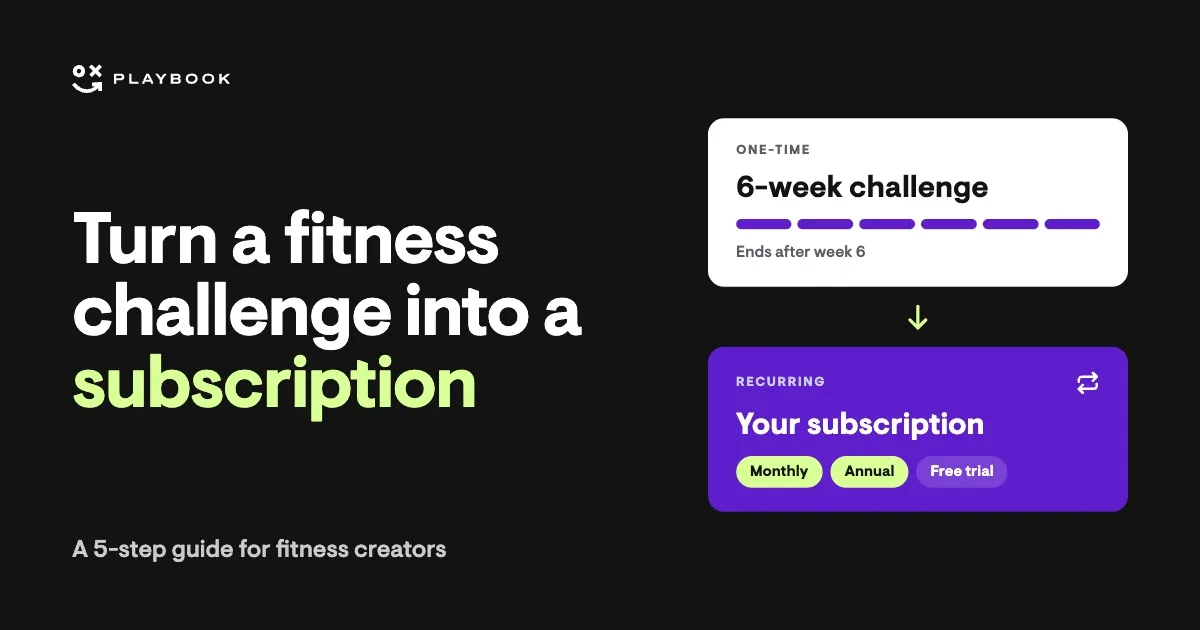
How to turn a fitness challenge into a subscription

Eden Metzler
How to make money as a content creator in fitness, from ads and brand deals to your own programs, with three questions that show which way to earn first.
Content creators make money in three ways: platforms pay them for views, brands pay them to reach their audience, and their audience pays them for something they made. If you’re a fitness creator, the third is the one you control, and whether you’re ready for it depends on how engaged your followers are, not how many you have.
The 13 ways to make money as a content creator fall into those three groups, and you can earn from more than one at once.
Platforms share money with creators whose videos keep people watching. The platform sets the rate and the rules.
| Way to earn | What it is | Fitness example | Who sets the price |
|---|---|---|---|
| Ad revenue | A share of the money from ads shown on your videos | A follow-along workout on YouTube | The platform |
| Creator bonuses and programs | Payments for views, or for hitting targets the platform sets | A series of short workout videos | The platform |
Both depend on views, and the platform can change the rate or end a program whenever it likes.
Brands pay to reach the people who follow you, so what they pay follows your reach and their budget.
| Way to earn | What it is | Fitness example | Who sets the price |
|---|---|---|---|
| Sponsored posts | A fee to feature a brand in a post or video | An activewear try-on | The brand, after you negotiate |
| Ambassador deals | An ongoing deal with one brand, usually over several months | Monthly posts for a supplement brand | The brand, after you negotiate |
| Affiliate links and codes | A cut of each sale made through your link or code | A discount code for resistance bands | The brand sets your cut |
| UGC (user-generated content) | Videos you make for the brand to post on its own channels | A product demo the brand runs as an ad | The brand |
Each deal ends when the brand decides it does. UGC is the one brand job that doesn’t need a big following, because the brand is paying for the video and posting it to its own audience.
Your audience pays you for something you made, at a price you set.
| Way to earn | What it is | Fitness example | Who sets the price |
|---|---|---|---|
| One-time programs | A plan people buy once and follow on their own | A beginner strength program | You |
| Challenges | A program with a start date that people do together | A postnatal core challenge | You |
| Subscriptions | Members pay monthly for new workouts and a community | Weekly pilates classes in an app | You |
| One-to-one coaching online | Custom plans and check-ins for one client at a time | A running plan with weekly check-ins | You, limited by your hours |
| Live or group classes | Paid sessions, online or in person | A weekly live yoga class | You |
| Tips and paid subscriptions on social platforms | Fans pay you through the platform | Subscriber-only stories with bonus workouts | You, minus the platform’s cut |
| Merch | Products with your name on them | Branded shirts or water bottles | You, minus what they cost to make |
This is the only group where the price is yours, and it grows from trust as much as reach.
No number of followers guarantees an income. What decides it is whether your followers engage with you, and whether you have something they’ll pay for.
Platform and brand money usually comes first for creators, and it pays for reach. Your audience pays for trust, so a small following that comments and asks questions can buy something, while a big one that only scrolls past may not.
In our experience, the strongest sign a creator will earn is that they’ve sold something before, even something small.
You’ll find tables online that match follower counts to pay, and they don’t say where their numbers come from, so we don’t use them.
Three questions decide your next step. Answer them in order, and stop at the first one that gives you a step.
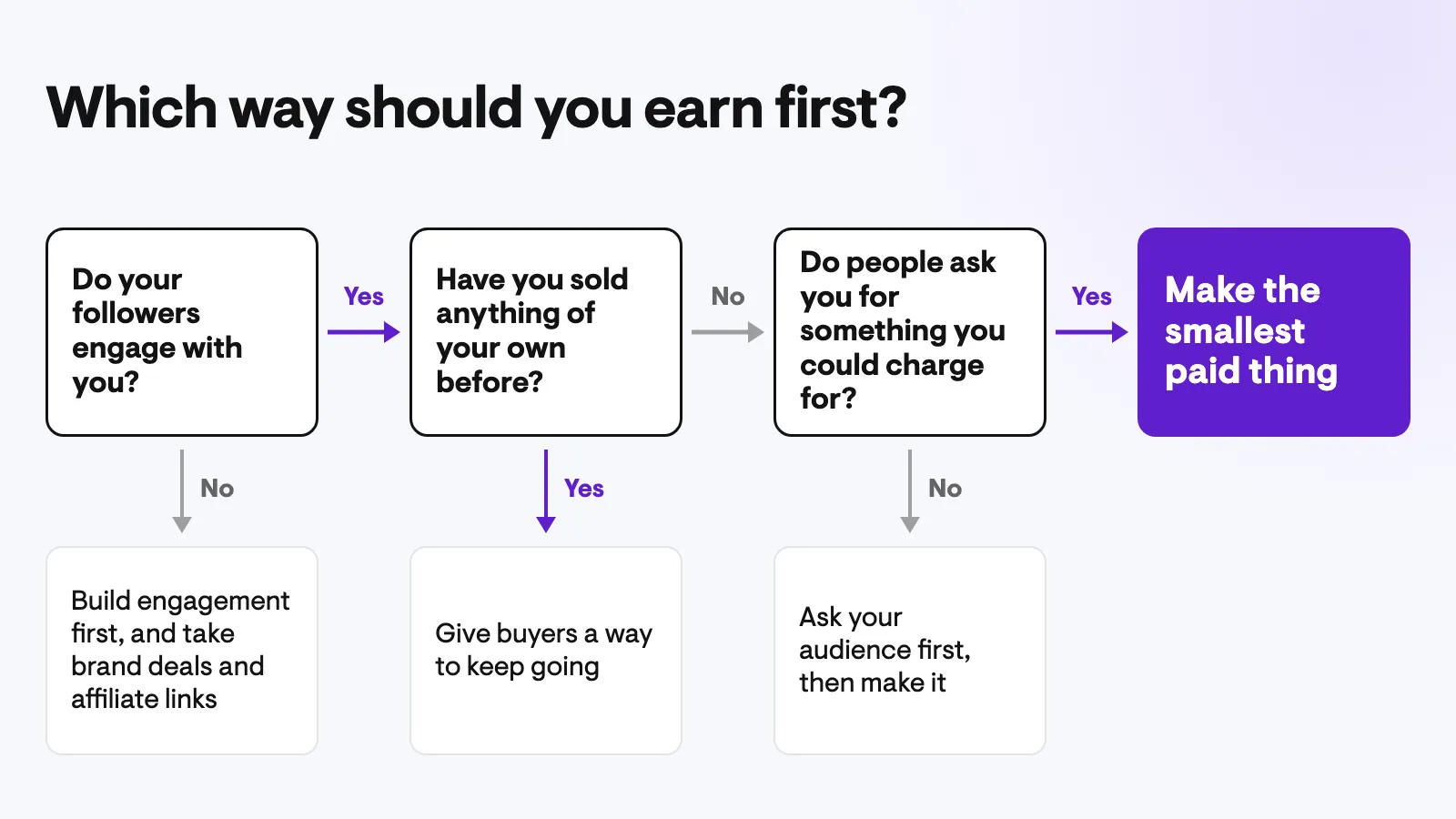
Every path keeps the brand deals and platform money. They run alongside whatever you build.
Fitness gives an engaged audience a reason to keep paying, because people who work out come back for the next workout.
Pick one kind of person and one result you’ll help them get. “New moms getting strong again at home” is the shape (an invented example), and it’s easier to sell than a version of your own routine, because the person reading it can see themselves in it.
The same works for strength, yoga, pilates, running, and pre and postnatal fitness. Pick one person and one result.
Ask before you build anything. Use a short survey or a story poll, and post it more than once, because plenty of people miss the first one.
Share it on social and anywhere else your followers talk to you, like your email list or a group chat. Their answers tell you what to make, and the words they use belong in how you describe it.
Start with a challenge or a short program, built from what your audience asked for. Keeping it small tests whether people will pay before you’ve filmed a whole library.
If you already coach clients, package what you already teach them into a program people can follow without you there.
On Playbook, a challenge is a program with its own sign-up and completion dates, sold on its own or inside a subscription.
A start date and a sign-up window give people a real reason to join now. Keep the deadline real, with no countdown timers that reset.
Across Playbook, challenge periods bring in more new and returning subscribers than a creator’s usual weeks.
Then tell people the way you already post. Keep sharing what’s useful, and end with one clear next step:
On Instagram, that’s a story with a link sticker or a reel with a comment keyword. On TikTok and YouTube, it’s the link in your profile and a pinned comment.
Selling this way keeps your feed from turning into a sales page, because most of what you post is still the content people followed you for.
Our guide on how to sell fitness programs online goes deeper on selling a little in everything you post.
Offer a free workout or a short guide in exchange for an email address, and keep it running between launches.
Not everyone who sees your offer buys it the first time. An email list lets you reach them next time, and it’s the part of your audience no platform can take away.
Lifecycle marketing for fitness creators lists the emails worth sending once people sign up.
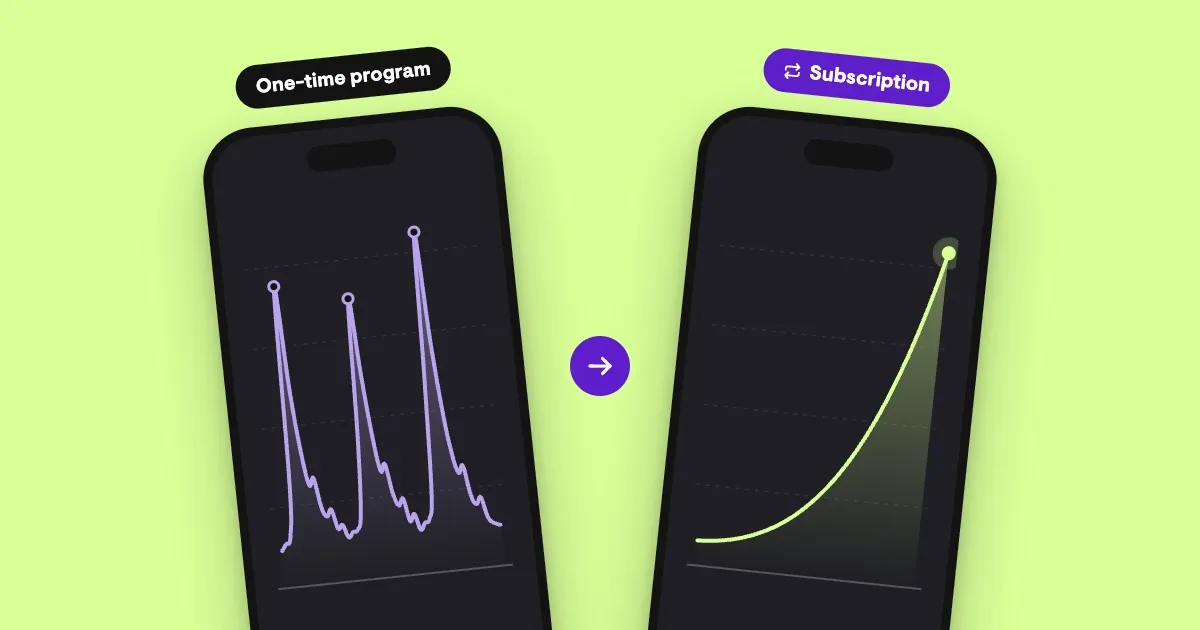
When people finish your challenge or program, invite them into a subscription, where members pay monthly for new workouts and a community. It’s the next step we recommend after a first sale.
A subscription keeps paying only while members keep getting something new, so pick a rhythm you can keep and tell members what it is. We recommend a new workout every week. Across Playbook, creators who post new workouts in most weeks keep more of their subscribers.
If you’ve run a challenge, start with how to turn a fitness challenge into a subscription.
Starting a subscription doesn’t mean you stop selling programs. Our guide to subscription vs. one-time program covers when each one makes sense.
If you’re already earning, the same move applies:
None of this runs on its own. It keeps earning because you keep adding workouts and showing up for the people in it, and that’s most of the job once you’ve launched.
Content creators get paid by platforms, brands, and their own audience. Platforms share ad money and run bonus programs, brands pay fees for posts and a cut of affiliate sales, and your audience pays you when they buy a program, join a challenge, or subscribe.
There’s no set number. Some brand work, like UGC, pays for the video, not your following, and a small audience that engages can buy a program of yours. The three questions above show where you are.
It depends on which of the 13 ways a creator earns from, so there’s no typical figure we’d stand behind. Platforms and brands set what they pay you; when you sell your own program or subscription, you set the price.
Most fitness creators start with brand deals and affiliate links, then add something of their own once their followers engage, like a challenge, a program, or a subscription.
On Playbook, every creator gets the community, with group coaching calls, courses, and templates, and Playbook also has a team of fitness business experts that helps creators launch and grow. It’s where fitness creators sell their workouts and programs, it’s free to start, and Playbook earns only when you do (you keep 80% of what you earn).
Start today. Especially if you don’t feel ready. Fear of failure kills fitness businesses before they even start. Sign-up’s quick and easy. You don’t pay a cent till you make a sale.